The arithmetic of an overhead bin: 45 linear inches, and what fits
The FAA gives one figure for most airlines, 45 linear inches, and every airline then sets its own. What the figure means, how to add up a rolling bag with its wheels and handle, why a garment duffel measured folded is a different bag from the same duffel measured open, and which of our bags go over your head and which go under the seat.

At the gate, the frame tells the story
The gate is busy, the overhead bins are already being claimed, and a sizer frame stands beside the desk. Your bag looks close enough until you lower it towards the opening. Then one corner catches. The bag that seemed manageable in the terminal does not go in.
That moment is less about appearance than measurement. A bag can look compact from one angle and still exceed the limit once its full height, width, and depth are counted. Wheels add to the height. Pockets and structured sides add to the shape. An expanded case may have a different figure from the same case closed.
We make bags that roll and the pieces that ride with them, so measurements matter in practical use. Our rolling bags are measured with the wheels included and the handle collapsed. Our garment duffels are measured folded into their travelling form, not spread open on a bed. Those details give you a clearer starting point before you reach the gate.
The point is not to predict every bin or every aircraft. Space varies, and the airline’s own rules decide what can travel in the cabin. A measurement on our product card cannot override the frame at the desk.
It can still help you pack with fewer surprises. Add the three dimensions, compare the total with the airline’s stated figure, then consider what you will carry under the seat. Start there, before the zip pockets fill and the bag becomes harder to reshape.
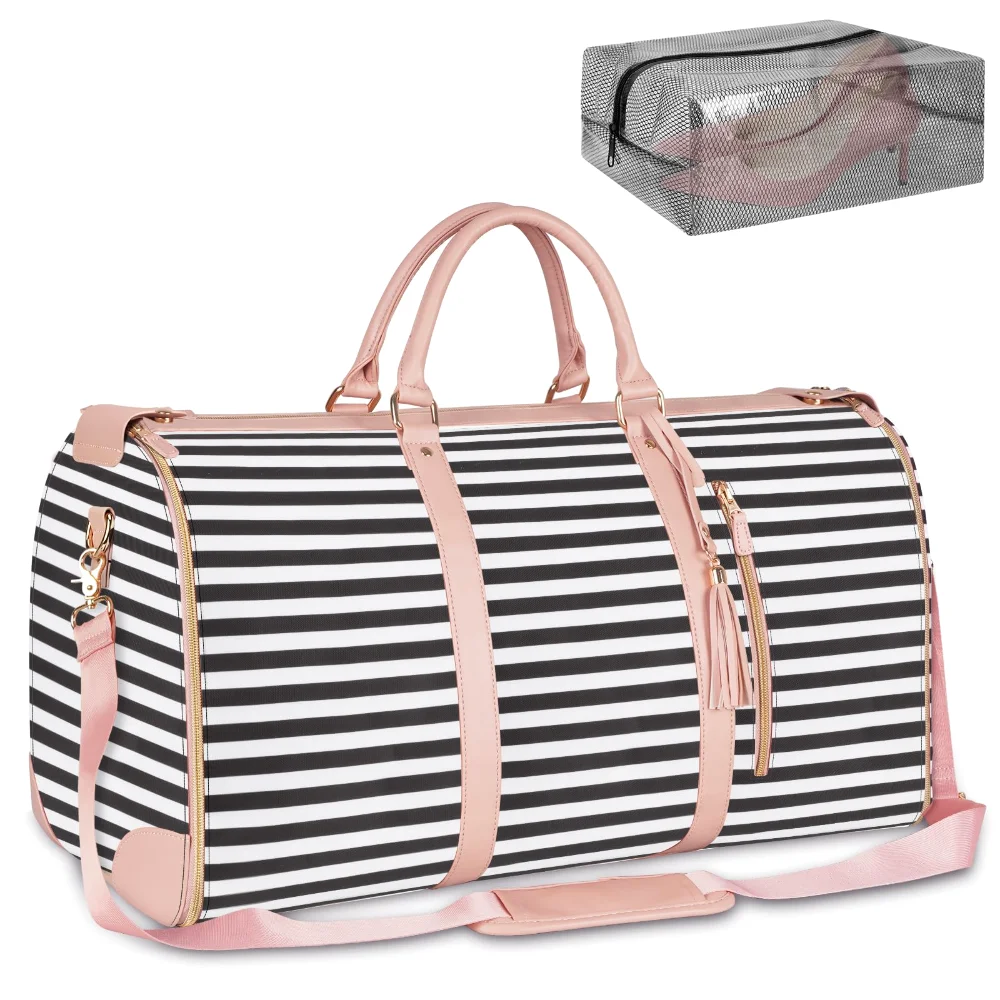
YTONET Garment Duffel, 20.5 × 10 × 12.5 in
20.5 × 10 × 12.5 in · PU leather · Water-resistant
$30.99
What 45 linear inches means
The Federal Aviation Administration’s page, “Carry-On Baggage Tips”, gives 45 linear inches as the maximum size carry-on bag for most airlines. Linear inches are the total of the bag’s height, width, and depth. Add those three measurements together, rather than treating the longest side as the whole answer.
The wording matters. The figure is for most airlines, not a size limit set by the FAA as a regulation. The airline sets the limit, and some airline rules are stricter than posted regulations. Before packing, check the rule for the airline and journey you are taking.
A single figure is useful because it reduces a three-dimensional object to a number you can compare. A photograph of an overhead bin cannot tell you whether a bag’s depth pushes its total beyond the allowance. It also cannot show the difference between a bag measured with its wheels, a bag measured without them, or a bag photographed partly open.
The arithmetic is simple. If a closed bag measures 17 by 14 by 9 inches, its total is 40 linear inches. If its shape changes when expanded, use the measurement that applies to the way you intend to carry it. A folded garment duffel belongs in the calculation folded.
This number is a planning tool, not a boarding pass. It does not account for every aircraft’s available bin space, and the FAA notes that some aircraft have limited overhead room. The airline’s stated dimensions remain the figure to follow.
Adding up a rolling bag
A rolling bag’s dimensions include its wheels. That point is easy to miss because the wheels sit below the main body, yet they occupy part of the bag’s overall height. Leave them out of the sum and the result will be smaller than the bag you place in a sizer.
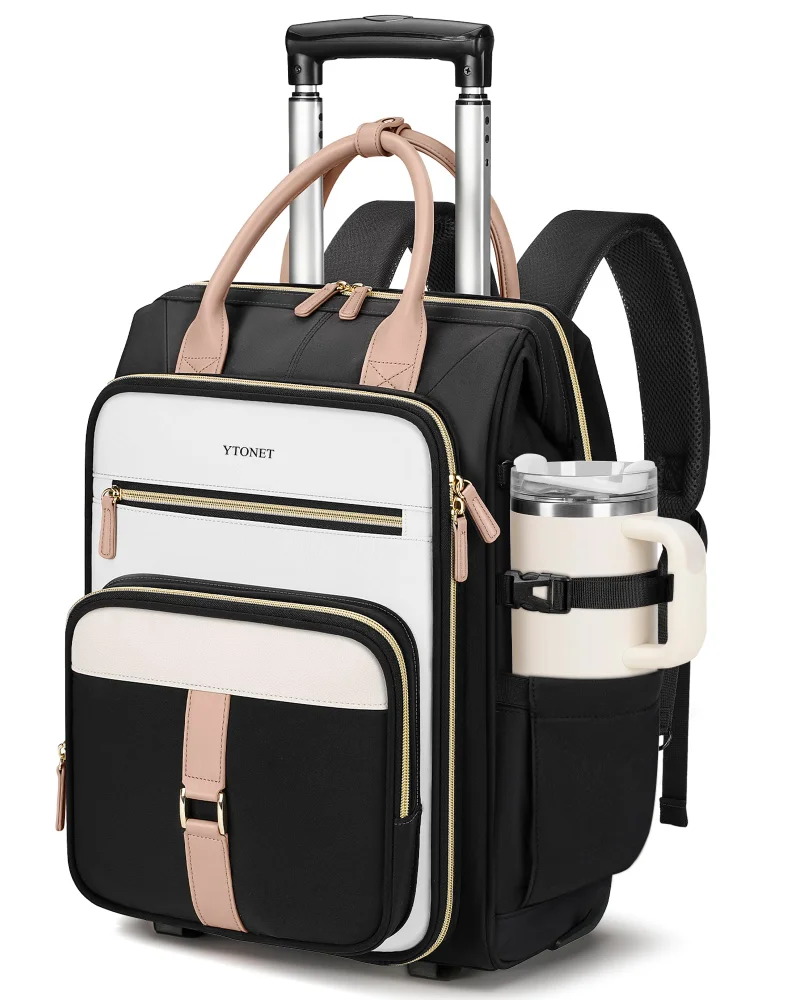
The handle is different when it collapses flat into its sleeve on the back. Our dimensions describe the bag closed with the handle down, so the extended handle is not added to the height. Measure the form in which the bag travels, not the taller shape it takes while you pull it through the terminal.
Take the 17.3-inch rolling bag with the lock. Its dimensions are 16.5 by 10.2 by 15 inches. Add 16.5 and 10.2 to get 26.7. Add 15, and the total is 41.7 linear inches. The calculation uses the stated height, width, and depth, with the wheels already included in that first figure.
Now take the four-spinner backpack. It measures 18.8 by 13.5 by 8.5 inches. The first two dimensions total 32.3 inches. Add the depth of 8.5 inches, and the result is 40.8 linear inches.
Both totals sit below 45 linear inches, but that comparison is only one part of cabin planning. The airline may use a different allowance, and bin space may be limited on a particular aircraft. Keep the handle down for the measurement. Count the wheels every time.
The garment duffel measured folded
A garment duffel has two forms. Open, it takes a suit or dress on its hanger. Folded in half over the garment, it zips into a duffel for travel. The open shape is useful while you load it, but it is not the shape that goes into an overhead bin or sizer.
Our PU leather garment duffel measures 20.5 by 10 by 12.5 inches folded. Add 20.5 and 10 to reach 30.5. Add 12.5, and the total is 43 linear inches. That is the figure to compare with the airline’s carry-on allowance.
The folded form also changes what the garment experiences in transit. A suit folded once at the waist has one main fold to deal with when you open the duffel. A suit folded four times in a suitcase has more folded sections pressed into the packed shape. The first may arrive with a single visible crease at the fold, while the second can show several creases from the tighter series of folds.
That is a description of the packing arrangement, not a promise about the condition of every garment. Fabric, fit, and how tightly the surrounding items are packed all affect what you see on arrival.
Our polyester garment duffel measures 20.5 by 9.8 by 12.2 inches folded. It holds 41 litres, weighs about 1.6 pounds empty, has a shoe pocket, and includes a strap for a suitcase handle. The PU leather version comes in ten colourways. For either one, use the folded dimensions when you do the arithmetic.
The figures on our product cards
| Our bag | Dimensions in inches | Linear-inch total |
|---|---|---|
| PU leather garment duffel, folded | 20.5 × 10 × 12.5 | 43 |
| Polyester garment duffel, folded | 20.5 × 9.8 × 12.2 | 42.5 |
| 17.3-inch rolling bag with the lock | 16.5 × 10.2 × 15 | 41.7 |
| 17.3-inch rolling bag with the cup holder | 17 × 14 × 9 | 40 |
| 15.6-inch rolling backpack | 17.2 × 13.2 × 7.5 | 37.9 |
| Four-spinner backpack | 18.8 × 13.5 × 8.5 | 40.8 |
| 17.7-inch rolling backpack | 13 × 8 × 17.7 | 38.7 |
| Gym backpack | 14.17 × 8.27 × 20.08 | 42.52 |
| Briefcase, closed | 17.3 × 13.6 × 6 | 36.9 |
The table shows why the total needs all three measurements. The 17.7-inch rolling backpack has a height of 17.7 inches, yet its full total is 38.7 once the width and depth are added. The gym backpack measures 42.52 linear inches, despite its 40-litre capacity.
The briefcase has a different profile again. Closed, it measures 17.3 by 13.6 by 6 inches, giving a total of 36.9. It expands to nearly 8 inches deep, so the closed figure is the one shown here. If you pack it expanded, use the form that reflects your travel setup and compare it with the applicable rule.
These totals do not label a bag as accepted on every airline. They give you a consistent way to read our dimensions. Place the number beside the airline’s limit before you start deciding what goes inside.
Over the head or under the seat
The overhead bin is not the only cabin space in the calculation. The FAA says that some aircraft have limited overhead bin space, so a personal item needs to fit under the seat in front. It also advises placing heavy items under the seat rather than overhead, because items falling from bins can injure passengers.
That guidance affects how you divide your load. A carry-on is the larger piece you plan to place in the bin, subject to the airline’s size rule. A personal item is the smaller piece you plan to keep beneath the seat, subject to the airline’s own dimensions. Our rolling bags and folded garment duffels sit in the carry-on conversation. Our briefcase, sleeves, and totes can serve as personal-item candidates, but the airline’s allowance and the available under-seat space decide the result.
Our sleeves and totes have a strap on the back that slides over the handle of a suitcase or rolling bag. The garment duffel also has a suitcase-handle strap. That lets a smaller piece ride with your rolling bag through the terminal instead of requiring a separate hand.
Keep straps tucked in before placing a bag in the bin. The FAA identifies loose straps as a tripping hazard and advises against stacking items in the bin. Pack the heavier contents low and keep access to the items you may need at screening.
A laptop is allowed in carry-on and checked bags. In a standard screening lane, the TSA says it comes out of the bag and goes into a separate bin, though the final decision rests with the officer. Pack with that possibility in mind.
At the gate, keep the essentials in the cabin
A bag can meet the airline’s size rule and still be gate-checked if overhead space runs short. That possibility changes what should remain inside. The FAA says to leave carry-ons behind during an evacuation, and its guidance also covers the contents that must stay with you if a bag is gate-checked.
Before handing over the bag, remove spare batteries and lithium-battery devices. That includes power banks, phones, and laptops. Keep those items in the cabin. A laptop is permitted in carry-on and checked baggage under the TSA’s laptop guidance, but if the bag is going into the aircraft hold at the gate, moving the laptop into your cabin piece keeps it with you. The final decision at screening remains with the officer.
The same practical habit applies before you reach the gate. Put devices and spare batteries where you can remove them without emptying the whole bag. Keep straps tucked away, and do not rely on the overhead bin for heavy items. If a bag is placed under the seat, the heavier contents belong there according to the FAA’s guidance.
The arithmetic has a clear limit. The airline’s own figure is the one that counts, and some airlines set stricter rules than the general 45-linear-inch figure for most airlines. The sum on our product card is there so you can hold it against that figure before you pack. Use the dimensions for the bag’s travelling form, count the wheels where stated, keep the handle collapsed, and then follow the airline’s instruction at the gate.
More of this sort of thing is in the Journal, the YTONET road crew keeps the whole range one click away on the front page, and the sources behind every checkpoint and carry-on statement are listed on how we update the catalogue.