What a teacher packs on a Monday, and how a rolling bag takes it
A laptop, a charger, two binders of marked work, a lunch, a water bottle, a coffee, a pencil case and a pair of indoor shoes: the Monday load of a teacher weighed and laid out, and where each thing rides in a rolling teacher bag so that nothing is on a shoulder between the car park and the classroom door.
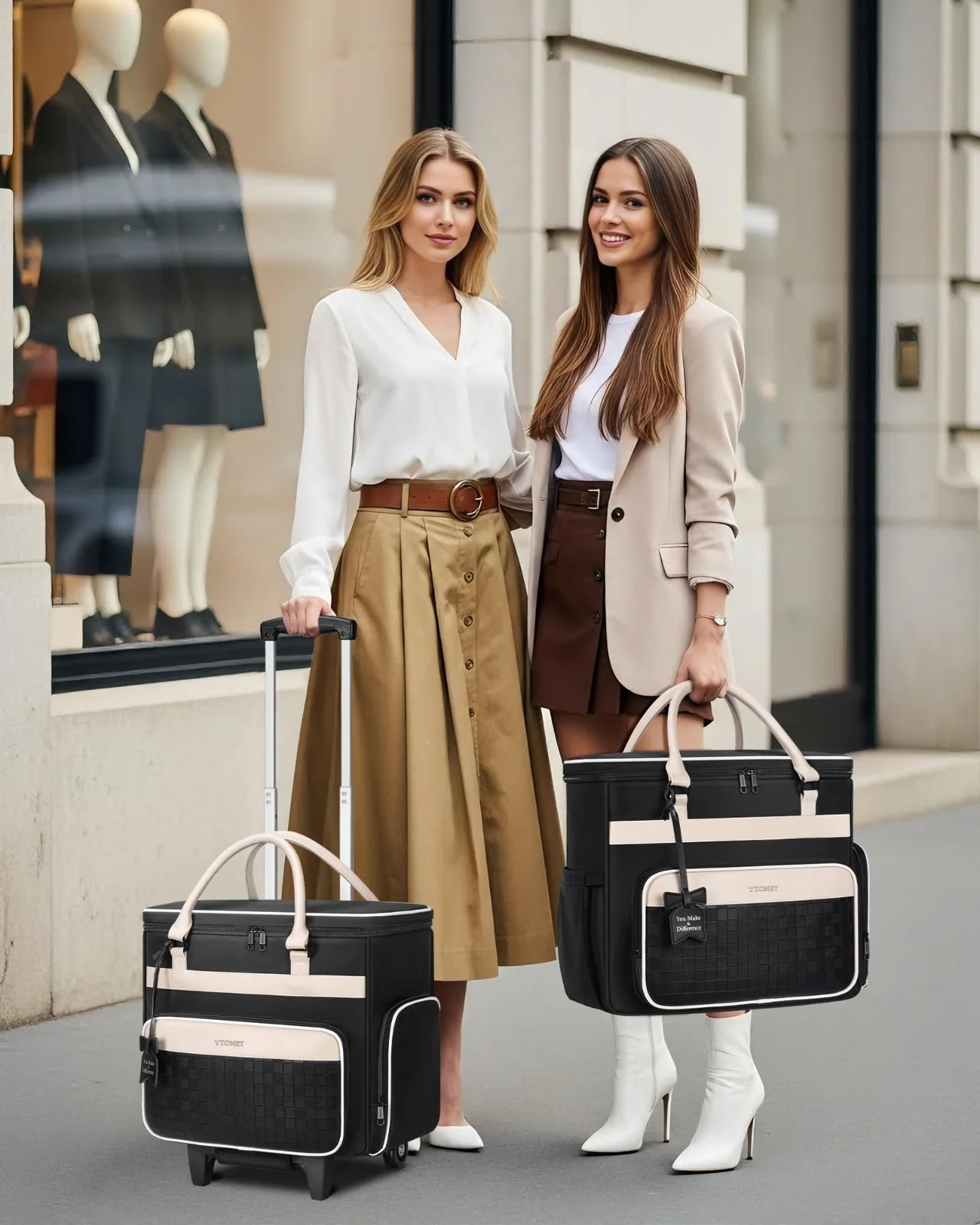
Twenty minutes before the bell
At twenty to seven, the car door opens and Monday gathers itself on the passenger seat. A laptop. Two binders of marked work. A lunch carrier, a water bottle, coffee, a pencil case, indoor shoes and a set of keys. There is always one more thing to find.
The shoulder that has carried this collection since August knows the shape of the week. It knows the hard corners of folders, the loose movement of a bottle and the awkward balance of a cup held beside everything else. A Monday bag is not one object. It is a working day in pieces.
We make our rolling teacher bag for that particular collection. The 15.6-inch laptop has a padded sleeve against the wheel side. Folders go into the wide compartment, which opens from the top. The lunch carrier clips to the front and unclips at the fridge. Coffee has a cup holder on the side.
There are fifteen pockets, so smaller things can have their own places. The two rubber wheels take the first stretch from the car park. At the stairs, the trolley detaches and the top handles take over.
Our teacher tote is another part of the arrangement. It can ride on the rolling bag’s telescopic handle, then come off for the afternoon. It carries a padded 15.6-inch laptop sleeve, an insulated pocket and a sewn-in cup holder. The strap on its back slides over the extended handle, keeping the two bags together in the morning.
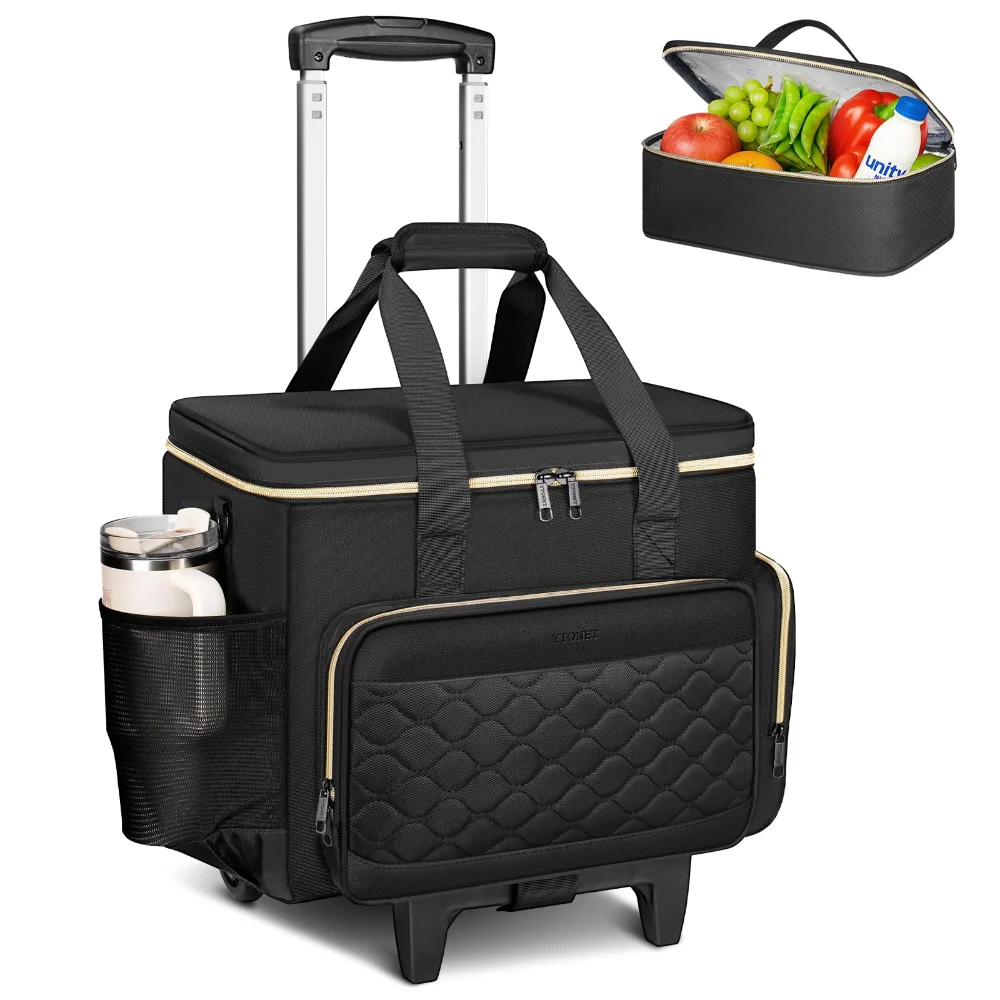
YTONET 15.6-inch Rolling Teacher Bag with Lunch Bag
Padded laptop sleeve · Two silent wheels · Cup holder
$59.99
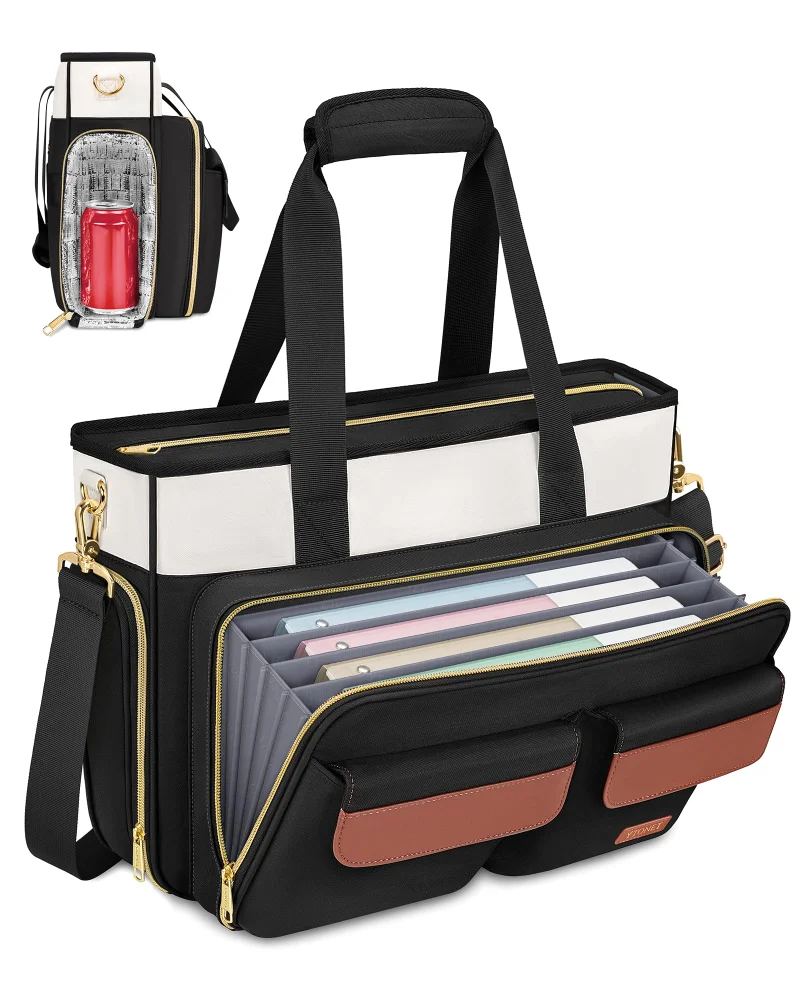
YTONET 15.6-inch Teacher Tote
Padded laptop sleeve · Slides over a suitcase handle · Cup holder
$19.97
The Monday load, item by item
A list helps before the first hurried reach into the cupboard. Here is where each part of the Monday load rides in the YTONET range.
| Item | Where it rides in the rolling teacher bag | Why |
|---|---|---|
| Laptop | Padded laptop sleeve | It has a defined place against the wheel side. |
| Charger | One of the fifteen pockets | A smaller pocket keeps it with the working kit. |
| Two binders of marked work | Wide top-opening folder compartment | The stack goes in from above without unpacking the bag. |
| A lunch | Detachable insulated lunch carrier | It unclips at the staffroom fridge. |
| A water bottle | Side pocket | It stays separate from folders and papers. |
| A coffee | Side cup holder | The cup rides outside the main compartment. |
| A pencil case | One of the pockets | Pens and pencils stay with the items used for marking. |
| Indoor shoes | The main compartment or tote | They can travel with the rest of the day’s changeover items. |
| A set of keys | A small pocket or the tote | They stay with the things needed between rooms. |
No one packs in exactly the same order every Monday. Some people begin with the laptop. Others start with lunch, then add the papers they need before the first lesson. The useful point is knowing where each object can go before the bag is full.
Our rolling teacher bag has a wide compartment for folders and fifteen pockets around the main space. The tote adds another option, with its own padded laptop sleeve, insulated pocket and side cup holder. You can keep the day in one bag, or separate the items that move most often.
The indoor shoes may stay in the rolling bag until the classroom. Keys may move to the tote when the morning changes into an afternoon of rooms and meetings. A bag works better when its arrangement follows the timetable.
The laptop and the marked work
The laptop sits in a padded sleeve against the wheel side of our rolling teacher bag. That placement gives the computer a named space, rather than leaving it loose among binders, shoes and lunch. It also means you can reach for it without sorting through the whole bag.
Marked work needs a different kind of access. The wide folder compartment opens from the top, so a stack of papers can go in without unpacking everything already inside. You lift the flap, place the folders in, and leave the laptop where it is.
That matters on a Monday morning. The papers may have been marked at home, arranged in order, and gathered while the coffee was brewing. The bag does not need to become a table before the day has started.
For work that travels closed, our zipper binders give the pages a separate format. They are three-ring binders that zip shut round three sides. One has two-inch rings for five hundred sheets, ten pockets and a padded sleeve on the inside cover for a 14-inch laptop. The other has three-inch rings for six hundred sheets and a padded sleeve for a 15.6-inch laptop. One version also has an outside cup holder and a handle.
The binders let marked work stay enclosed as it moves from the car to the classroom. You can carry one by its handle, place it into the rolling bag, or use it as the closed unit for the papers that need to go home again.
There is no need to make every item share the same compartment. A laptop has its sleeve. Folders have their opening. Marking has its binder.
Lunch at the fridge, coffee by the handle
Lunch begins the day inside the detachable insulated carrier clipped to the front of our rolling teacher bag. At the staffroom fridge, it unclips and goes in on its own. The rest of the bag can stay with you, beside the desk or under a table, while lunch waits for later.
The carrier is part of the bag’s arrangement, not a loose extra to find at the bottom. Its front position makes it visible when the morning starts. The insulated pocket in our teacher tote gives you another place for food when that bag is doing the afternoon work.
Coffee has a separate place. The cup holder sits on the side of the rolling bag, keeping the cup upright and out of the crook of an elbow. Our teacher tote has a cup holder sewn into its side as well. A bottle can use a side pocket, while the coffee stays outside the main compartment.
One week a year, the bag may travel through an airport. The TSA page titled “What Can I Bring? Gel Ice Packs” says a gel ice pack can pass screening in a carry-on when it is frozen solid at presentation. If it is slushy or melted, it falls under the 3-1-1 liquids rule. Medically necessary packs are allowed in any state.
That is a rule about the ice pack, not a claim that the bag is TSA-approved. Pack the carrier with the same attention you give the laptop and the papers. At the other end, the lunch can come out at the fridge, while the coffee remains in its holder for the walk to class.
From the car park to the stairs
The first part of the route is often the car park. Our rolling teacher bag has two rubber wheels for that stretch, then a telescopic handle that locks at each stop. You can set the handle at a height that suits the walk, including hip height, before moving towards the building.
A kerb changes the movement. Lift the bag over it, then set the wheels down and continue. The point is not to make the route disappear. It is to give the load two ways to travel.
Stairs ask for a different arrangement. The trolley detaches from the bag, so you can carry the bag by its top handles up a flight. At the top, the trolley goes back on and the wheels return to the route.
That change can happen between the car park and the classroom, or at any other point where wheels are no longer useful. Buyers have mentioned parking lots, classrooms and stairs when describing where their rolling bags go. Each place asks for a small decision about how the bag should move next.
The telescopic handle locks at each stop rather than floating between positions. One buyer who is five feet tall wrote about adjusting the handle to a comfortable height. We make no assumption about your height or route. The handle, wheels, trolley and top handles give you choices for the ground in front of you.
A long school day has more than one surface. The bag can roll across the car park, travel on its trolley, and become a handled bag for the stairs. Then it can roll again at the top.
The tote becomes the afternoon
In the morning, our teacher tote rides on the extended handle of the rolling bag. Its back strap slides over the handle, so the two move as one from the car park to the building. The tote is sold on its own and in a set with the rolling bag.
At the desk, it can come off. That is the point when the day changes shape. The rolling bag can stay with the larger load, while the tote goes to the next room on a shoulder.
What moves into it depends on the afternoon. The laptop can use its padded 15.6-inch sleeve. A lunch or snack can go into the insulated pocket. Coffee has the sewn-in side cup holder. Keys and a pencil case can follow, while the marked binders and shoes remain in the rolling bag.
The tote is also a place for the things you need close at hand without taking the full rolling bag through every doorway. Its strap is made for the extended handle in the morning, then for carrying once the two bags separate.
You may prefer to keep the laptop in the rolling bag until the final lesson. You may move it to the tote before leaving the desk. Both arrangements work with the spaces provided, as long as the items you need next are the ones that travel next.
A nurse in long-term care has written about using the teacher bag for supplies on twelve-hour shifts. The details of that day differ from a school timetable, but the same principle applies. A larger load can stay on wheels while a smaller selection comes with you.
What the load means
The American Academy of Pediatrics says a child’s school backpack should not weigh more than 15 per cent of the child’s body weight. Its example is direct: a 100-pound child should carry no more than 15 pounds. The guidance also says the heaviest items should go closest to the body and names a rolling backpack as an option when a pack is too heavy, if the school allows it.
That guidance is about children. It says nothing about teachers.
A teacher carries what a child carries, then adds the work that follows the lesson. There may be marked books, a laptop, lunch, a bottle, coffee, indoor shoes and the things needed for the next room. The child has a rule in the guidance. The teacher does not.
So the useful question is not how to make a large working load sound small. It is how the load moves through the day. Our rolling teacher bag gives the laptop a padded sleeve, folders a top-opening compartment, lunch a detachable carrier and coffee a side holder. The trolley can detach for stairs, then return for the next flat stretch.
When the load is on wheels, some of its movement changes from carrying to rolling. That does not erase the contents or make a promise about your back, shoulders, posture or health. It simply gives you another way to take the bag from the car park to the classroom.
At the desk, the tote can separate. At the stairs, the trolley can come off. At the fridge, the lunch carrier can unclip. Monday stays full, but each part has a place and a route.
More of this sort of thing is in the Journal, the YTONET desk keeps the whole range one click away on the front page, and the sources behind every checkpoint and carry-on statement are listed on how we update the catalogue.